ALS Scandinavia offers analyses for invasive plants. We can identify Japanese knotweed, Giant knotweed, Canada goldenrod, Giant hogweed and Lupin in soil samples using DNA technology.
When soil is transported, seeds and roots can follow and establish new shoots. Invasive species can displace native plants and reduce biodiversity. Seeds or root fragments can be difficult to detect if the plant is not visible above ground, but with DNA analysis we can detect small amounts of plant material.
The analyses can be used when invasive species are suspected and for control during soil transport. The method is suitable for post-control of excavation, but not for post-control of chemical or thermal control because DNA analyses cannot distinguish between living and dead plant material.
ALS in Danderyd has developed specific eDNA analyses (environmental DNA) with qPCR (real-time PCR) and designed primers and probes for invasive plants. The result is reported as “detected” or “not detected”.
Our analysis packages
A-3p eDNA of Japanese knotweed and Giant knotweed in soil
Japanese knotweed Reynoutria japonica (including Bohemian knotweed Reynoutria × bohemica) and Giant knotweed Reynoutria sachalinensis, are detected with analysis package A-3p and are listed as invasive species by the EU. Japanese knotweed is among the most challenging species to manage, and its persistence can cause mechanical control to backfire, stimulating further growth. Dispersal occurs via the root network, where even small root fragments can give rise to new plants.
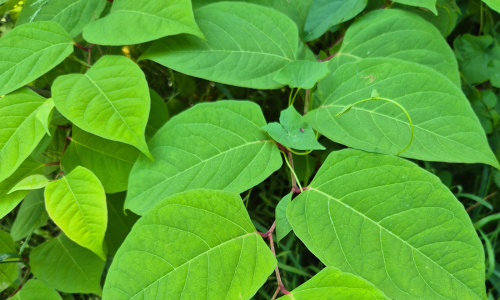
A-3s eDNA of Canada goldenrod in soil
Analysis package A-3s includes the species complex Canadian goldenrod Solidago canadensis agg. (including Giant goldenrod Solidago gigantea) and hybridization. They are invasive and spread mainly by seeds, but also via roots. Each plant can produce several thousand seeds per year.
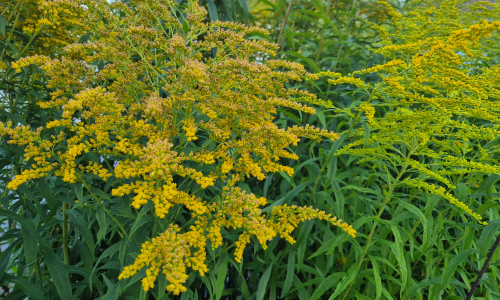
A-3t eDNA of Giant hogweed in soil
The species complex Heracleum mantegazzianum agg. (including several species such as Persian hogweed and Sosnowsky's hogweed, as well as hybridization – for the full list, see artfakta.se) is included in analysis package A-3t. It is often confused with our native Common hogweed Heracleum sphondylium, which is smaller in size. Hogweed sap, together with sunlight, can cause skin injuries. Giant hogweed is included on the EU list of invasive species.
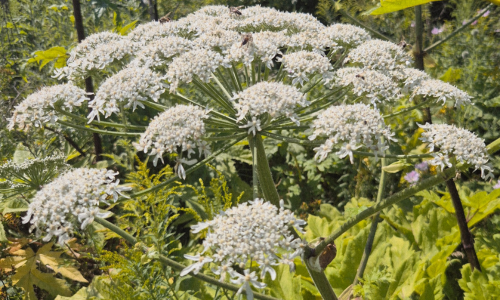
There are several lupine species, of which Large-leaved lupine (Lupinus polyphyllus), Russell lupine (Lupinus × regalis), Nootka lupine (Lupinus nootkatensis), and Sundial Lupine (Lupinus perennis) are invasive. The entire genus Lupinus is included in the analysis package, which means that species without invasive status may also be detected. Lupines spread mainly by seeds, but also via roots.
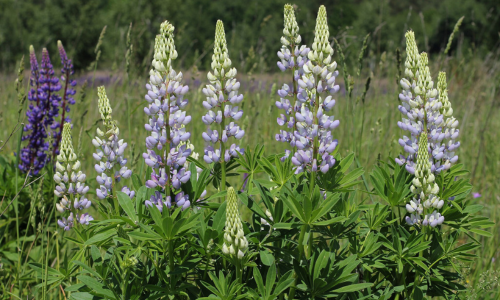
Combination package
A-3x eDNA of invasive species in soil
Do you need to analyze multiple invasive species? Our combination package includes Japanese knotweed, Giant knotweed, Canadian goldenrod, Giant hogweed and lupines.
Do you want to learn more about eDNA analyses?
Here you’ll find sampling instructions for eDNA. Feel free to contact us for more information.